





Surface Laptop Ultra Leads Microsoft’s New Push for Local AI

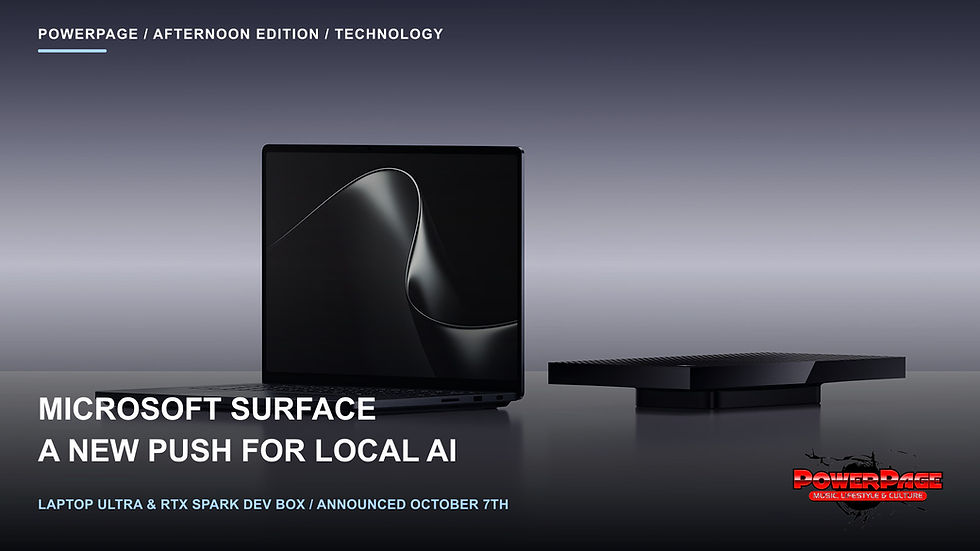
Surface Laptop Ultra is the centerpiece of Microsoft’s October 7th hardware announcement, which pairs a new premium laptop with a compact developer desktop. The company is targeting creators and technical users who want more artificial-intelligence work to run on their own equipment.
According to Microsoft’s device announcement, Surface Laptop Ultra starts at $2,599, with preorders opening today and availability beginning October 16th. Surface RTX Spark Dev Box costs $5,999, is offered through Microsoft’s U.S. store, and is scheduled to begin shipping in November. The two products therefore do not share a launch-day delivery window.
Both use NVIDIA’s RTX Spark platform. The laptop offers configurations with up to 128 GB of unified memory and a 15-inch touchscreen. Microsoft also lists HDMI, USB-A, an SD card reader, and a headphone connection alongside USB-C ports. Its magnetic charging cable attaches to a USB-C port that retains data and display functions.
The broader Windows announcement explains the software direction: move suitable AI tasks between local hardware and cloud services. Microsoft says GitHub’s hybrid routing is coming to an experimental preview later in October, while related Copilot capabilities are expected to begin rolling out on Copilot+ PCs in the coming months. Buying new hardware today does not mean every announced software feature is already available.
For music makers, video editors, and other creators, the relevant question is how this equipment fits the tools they already use. Local processing may be useful for selected workloads, but it does not by itself establish compatibility with every audio plug-in, editing application, or game. This is an announcement report, not a hands-on performance review.
Before comparing configurations, separate the starting price from maximum specifications, and distinguish shipping dates from software previews. Microsoft’s published performance figures are manufacturer claims. Independent testing will be needed to judge sustained workloads, everyday battery life, and how much practical benefit these systems deliver for a particular creative setup.



Comments